Mouse Trap Tips for Effective Pest Control Solutions?
When dealing with pesky rodents, a mouse trap is an essential tool. Understanding how to use it effectively can make a difference in pest control. Many people underestimate the importance of the right trap. Choosing the right type can determine success or failure.
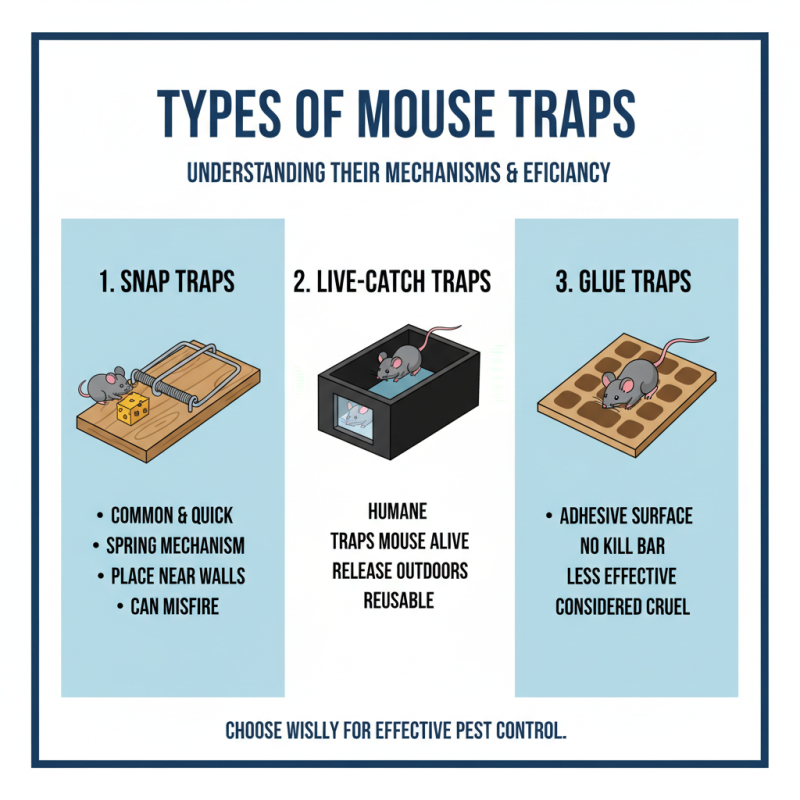
Mouse traps come in various designs. Some are traditional snap traps, while others use glue or electric mechanisms. Each has its advantages and drawbacks. For instance, snap traps are quick but may not be suitable for every situation. Glue traps can sometimes lead to a slow demise, raising ethical concerns. It's worth exploring these options.
Setting the mouse trap requires careful attention. Location matters greatly; placing it near droppings or common paths can increase catch rates. Bait selection is also crucial. Peanut butter often proves more enticing than cheese. However, experimenting with different baits is essential to find what works best. Being observant and ready to adapt will enhance the effectiveness of your mouse trap strategy.

Types of Mouse Traps: Understanding Their Mechanisms and Efficacy
When it comes to mouse traps, understanding their mechanisms is crucial for effective pest control. There are several types, each with unique features. Snap traps are among the most common. These devices leverage a spring mechanism, snapping shut when a mouse triggers the bait. Successful use often relies on strategic placement near nesting areas or common travel routes. However, they can be tricky. Sometimes, the trap might not go off, leaving you frustrated.
Glue traps offer a different approach. They use a sticky surface to capture mice that wander onto them. While these are easy to set up, they raise ethical questions about humane treatment. Mice can suffer for extended periods, making this a controversial choice. Careful thought is necessary before deciding on this method. Electric traps are another option. They deliver a quick and humane electric shock to the intruder. Yet, these can be costly and require batteries, which may not suit everyone's needs.
Each trap type has its efficacy. Some may work better in specific settings than others. A trap that catches one mouse may fail with another. There’s a learning curve in using traps effectively. Adjustments are sometimes required to enhance success. Keep an open mind, and be willing to revisit your approach if the traps aren't performing as expected.
Optimal Bait Selection: Enhancing Trap Attraction with Proven Techniques
Choosing the right bait can greatly enhance the effectiveness of mouse traps. Mice are attracted to a variety of scents and tastes. Peanut butter is a popular choice, but cheese can work too. Some people recommend using a mix of both for a stronger scent. A small amount of chocolate can also be enticing. This could vary depending on the mouse population in your area.
Another interesting strategy involves incorporating seeds or grains. Mice often seek out food sources. Placing a few sunflower seeds next to peanut butter could increase trap success. Additionally, using cotton balls soaked in vanilla extract can draw them closer. Observing mouse behavior might lead to better bait choices.
However, the process can be hit-or-miss. What works for one person may not work for another. Results can vary based on location and trap placement. Sometimes, mice show little interest. Reflecting on these experiences can guide future efforts. Trying different baits is crucial. It’s an ongoing learning process in pest control.
Mouse Trap Tips for Effective Pest Control Solutions
| Bait Type |
Effectiveness Rating (1-5) |
Best Usage Tips |
Trap Location |
| Peanut Butter |
5 |
Use a small amount; mice are attracted to the scent. |
Near walls and where droppings are found. |
| Chocolate |
4 |
Combine with nuts for enhanced attraction. |
In pantry or areas with food residues. |
| Cheese |
3 |
Use aged cheese for stronger smell. |
Near nesting areas, garages, and basements. |
| Seeds and Grains |
4 |
Keep fresh and dry to maintain scent. |
In accessible areas where mice forage. |
| Fruits |
3 |
Cut into small pieces to enhance exposure. |
Close to fresh food sources within homes. |
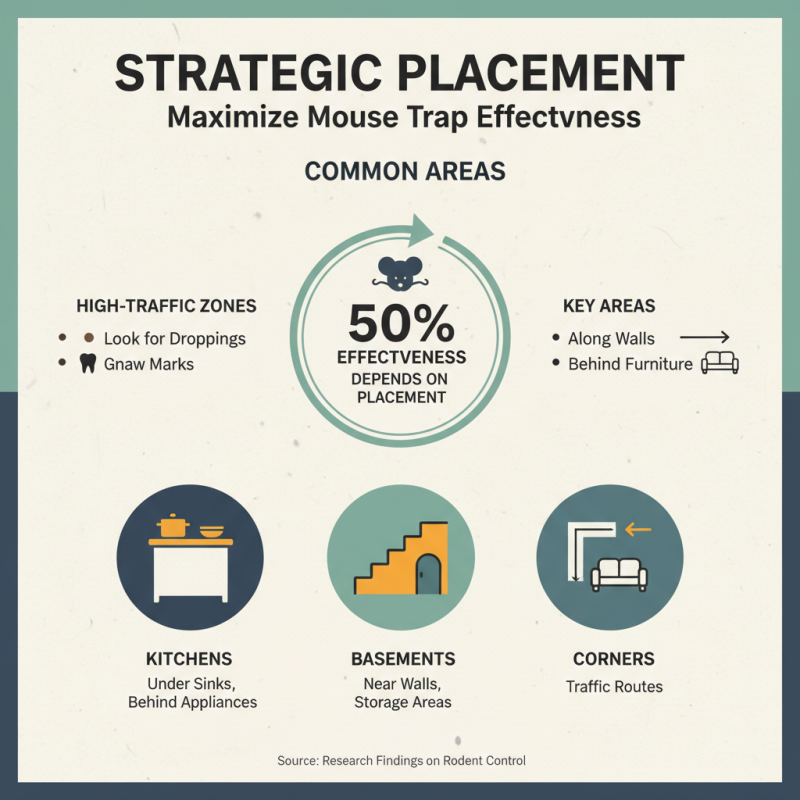
Strategic Placement: Maximizing Mouse Trap Effectiveness in Common Areas
Strategic placement is crucial for maximizing the effectiveness of mouse traps in common areas. Research shows that 50% of mouse catches depend on where traps are set. High-traffic zones are prime locations. Look for signs of activity, such as droppings or gnaw marks. These areas include kitchens, basements, and corners.
Consider placing traps near walls and entry points. Mice tend to travel along edges. The spacing between traps should be about 10-15 feet apart in areas with heavy infestations. This way, you increase the chances of a successful catch. Use multiple traps together for better results.
Tip: Check traps regularly. Mice are more active at night. Refresh bait frequently to maintain attraction. A study found that peanut butter increased trap success by 80%. Also, avoid overloading one spot. Too many traps can deter mice. Be mindful of the environment. Set traps in places where pets and children won’t have access.
Maintenance and Monitoring: Best Practices for Trap Management and Safety
Effective trap management requires regular maintenance. Check traps often to ensure they are functioning properly. A malfunctioning trap can lead to missed targets. Inspect the bait as well. Use fresh, appealing options to attract pests effectively. Old or spoiled bait can deter rodents instead of attracting them.
Monitoring is equally crucial. Keep a log of trap placements and the catches. Note the times and frequency. This information helps identify patterns in pest activity. Adjust trap locations if needed based on your observations. If a trap catches nothing for days, it might be in the wrong spot.
Lastly, remember safety. Always wash your hands after handling traps. Use gloves when placing or checking traps. Store traps in a safe, dry place, out of reach of pets and children. Each of these practices contributes to a more effective pest control strategy, ensuring both safety and success.
Data-Driven Results: Analyzing Success Rates of Various Trap Types
When it comes to pest control, the effectiveness of mouse traps varies significantly. Data from the National Pest Management Association shows that traditional snap traps have a success rate of 60-70%. They are simple, cost-effective, and easy to use. However, many people find they need to place multiple traps to see results. This suggests that while snap traps are effective, they are not foolproof.
In contrast, electronic traps, which kill mice with a high-voltage shock, report a success rate of approximately 90%. A study conducted by the University of Massachusetts found these traps reduce the need for frequent checks and are more humane. Yet, they come with higher costs and require batteries.
While convenience is important, reliance on a single type of trap can be limiting. A multi-faceted approach often yields the best results. Combining different trap types based on specific environments can enhance effectiveness. It’s clear that understanding the strengths and weaknesses of various traps is crucial for successful pest management.



 Bird & Pigeon Pest Control
  Mice & Rat Pest Control
  Mole & Vole & Gopher Pest Control
  Fly Insect Pest Control
  Wasp & Bee Pest Control
  Moth Pest Control
  Mosquito Pest Control
  Cockroach Pest Control
  Wildlife Pest Control
  Snake Pest Control
  Bed Bug & Flea Pest Control
  Snail & Slug Pest Control
  Ant & Termites Pest Control
  Spider Pest Control
  Other Insect Pest Control
  Garden Products
  Blog
Blog  Dining Group
 Occasional Tables
 Barstool
 Company Profile
 Our Advantages
 Certification
 Factory VR
 Photos
 Videos
 Product News
 Industry News
 Media Live
 Our Services
 Distributor and Agent
 FAQs
FAQs