• Haierc-To Be the Best Supplier of Pest Control Items
  • Leave Your Message

    10 Essential Tips for Using Bird Repellent Flash Tape Effectively

    In the evolving world of pest control, effective solutions are essential. Bird Repellent Flash Tape is a popular tool among gardeners and farmers. According to Dr. Emily Carter, an expert in avian behavior, “Using the right strategies can greatly reduce bird damage.” Her insights emphasize the importance of understanding how to use these tapes effectively.

    Many users overlook basic principles when implementing Bird Repellent Flash Tape. It’s crucial to ensure proper installation to maximize its effectiveness. The tape works best when placed in areas where birds frequently gather. Regular monitoring helps to determine its success over time. Some may find that certain locations require adjustments or additional measures for optimal results.

    Bird Repellent Flash Tape is not a foolproof solution. Its effectiveness can vary with environmental conditions. Users must be prepared to adapt their strategies based on feedback. A thoughtful approach, guided by expert advice, enhances the chances of success in keeping birds at bay.

    10 Essential Tips for Using Bird Repellent Flash Tape Effectively

    How Bird Repellent Flash Tape Works: The Science Behind Its Effectiveness

    Bird repellent flash tape operates on simple yet effective principles of light and sound. The shiny surface creates reflections that confuse birds, disrupting their navigation. This method is grounded in research from avian studies, stating that visual disturbances can significantly reduce bird presence in specific areas. The American Bird Conservancy suggests that reflective materials can decrease bird activity by up to 70%. Such data highlight the efficacy of this non-toxic solution.

    Moreover, the tape's movement in the wind adds an auditory element. The rustling sound further deters birds by introducing an unfamiliar noise to their environment. A report from the Journal of Wildlife Management indicates that combining visual and auditory deterrents yields higher success rates than using either method alone. However, effectiveness can vary based on environmental factors, such as the type of birds and their habitat conditions. It is vital to simply assess the immediate area and monitor results, as some operations may need adjustments to achieve ideal outcomes.

    Effectiveness of Bird Repellent Flash Tape

    This chart illustrates the effectiveness of Bird Repellent Flash Tape over time, with a clear increase in the bird deterrence rate as the months progress following installation.

    Identifying Areas of Heavy Bird Activity Before Installing Flash Tape

    Before installing bird repellent flash tape, it's crucial to identify areas of heavy bird activity. Observing bird behavior helps pinpoint where they gather most. Look for areas where birds frequently perch or feed. These spots can be rooftops, awnings, or even trees near your home. The tape is most effective when placed strategically in these locations.

    Spend some time monitoring the birds. Take notes on their activity patterns throughout the day. Look for clusters of birds or specific flight paths they use. This observation period might reveal surprising details. You may find an area that seems quiet but becomes active at certain times. These insights will ensure you maximize the effectiveness of the flash tape.

    Installing the tape in the wrong place can lead to little improvement. Remember that birds are creatures of habit, so disrupting their routine matters. If you don’t see immediate results, reassess your chosen locations. You might need to move the tape to a spot you initially overlooked. Experimentation and patience are key during this process. Your awareness can significantly improve your results.

    Preparing Surfaces for Optimal Adhesion of Bird Repellent Flash Tape

    Preparing surfaces for bird repellent flash tape is essential for achieving maximum adhesion. Before applying the tape, ensure that the surfaces are clean and dry. Dust, dirt, and moisture can prevent the tape from sticking effectively. A simple wipe-down with a cloth can remove loose particles. However, don’t be surprised if stubborn residues remain. Sometimes, using a mild soap solution followed by a thorough rinse is necessary.

    It’s also important to consider the type of surface. Flat, smooth surfaces provide the best adhesion. Textured or uneven surfaces may not hold the tape well. If you’re working with such surfaces, try sanding down the area if possible. This step can significantly improve how the tape adheres. However, not everyone may have the tools or experience to do this effectively. If you hesitate to proceed, consulting a professional might save you time and effort.

    After cleaning, allow the surface to completely dry. This can take longer than expected, especially in humid conditions. If not dry, the tape will lift and fail to perform. Applying the tape in ideal weather conditions can make a difference. Avoid applying on windy or rainy days. The tape may struggle to stay put, leading to unexpected failures.

    10 Essential Tips for Using Bird Repellent Flash Tape Effectively

    Tip Description Surface Prep Installation Tips
    Clean the Surface Ensure that the surface is free from dust, dirt, and grease. Use soap and water or a degreaser. Wipe with a lint-free cloth.
    Choose the Right Location Select an area with high bird activity. Look for nesting or feeding sites. Position tape where birds frequently visit.
    Dry the Surface Ensure the surface is completely dry before application. Check for moisture after cleaning. Use a fan if necessary to speed up drying.
    Use Appropriate Tape Select a bird repellent tape that suits your environment. Consider weather conditions and types of birds. Opt for reflective and shimmering types for best results.
    Cut to Size Measure and cut the tape to fit the area being protected. Avoid overlaps to maintain effectiveness. Use scissors for a clean cut.
    Ensure Proper Adhesion Press the tape firmly against the surface for strong adhesion. Use a roller or cloth to smooth it down. Check for bubbles or loose edges.
    Regular Maintenance Inspect the tape regularly for wear and tear. Replace sections of tape as needed. Check for accumulation of dirt and debris.
    Combine with Other Methods Use alongside other bird deterrents for increased effectiveness. Consider visual and auditory scare tactics. Mix strategies for better results.
    Be Patient Allow some time for the tape to deter birds effectively. Results may vary based on bird species. Monitor continuously for impact.

    Best Practices for Installing Bird Repellent Flash Tape for Maximum Coverage

    10 Essential Tips for Using Bird Repellent Flash Tape Effectively

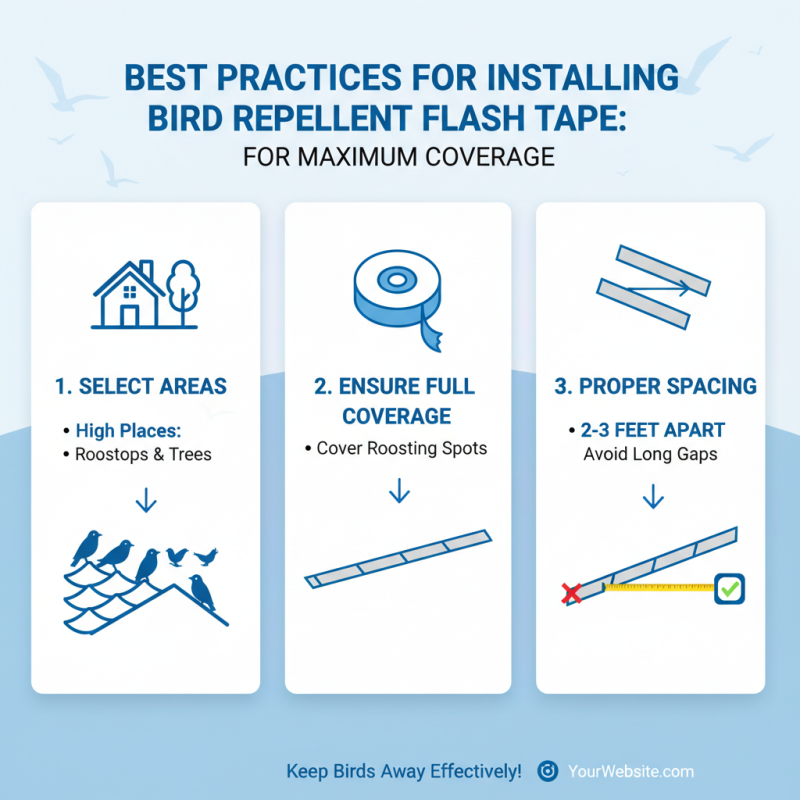
    Installing bird repellent flash tape effectively requires careful attention to detail. Start by selecting the right area. Birds often roost in high places, like rooftops or trees. Ensure the tape covers these spots fully. When placing the tape, avoid long gaps. Each piece should be at least 2-3 feet apart but not too far to allow birds access.

    Proper installation also involves positioning the tape at an angle. This helps maximize the reflective effect. Test the tape during different times of the day. The sunlight's angle changes, so observe how well it shines. If it doesn’t reflect light as intended, readjust its angle. The installation height is important too. Place the tape where birds usually land or perch.

    Remember, repetition may be necessary. If birds still persist, consider adding additional strips. The aim is to create a visual barrier. During installation, you might realize some areas are harder than expected. It’s okay to re-evaluate and make changes. Regularly check the tape for wear and tear. Update the installation as needed to maintain effectiveness against avian intruders.

    Monitoring and Maintaining Bird Repellent Flash Tape for Long-Term Success

    10 Essential Tips for Using Bird Repellent Flash Tape Effectively

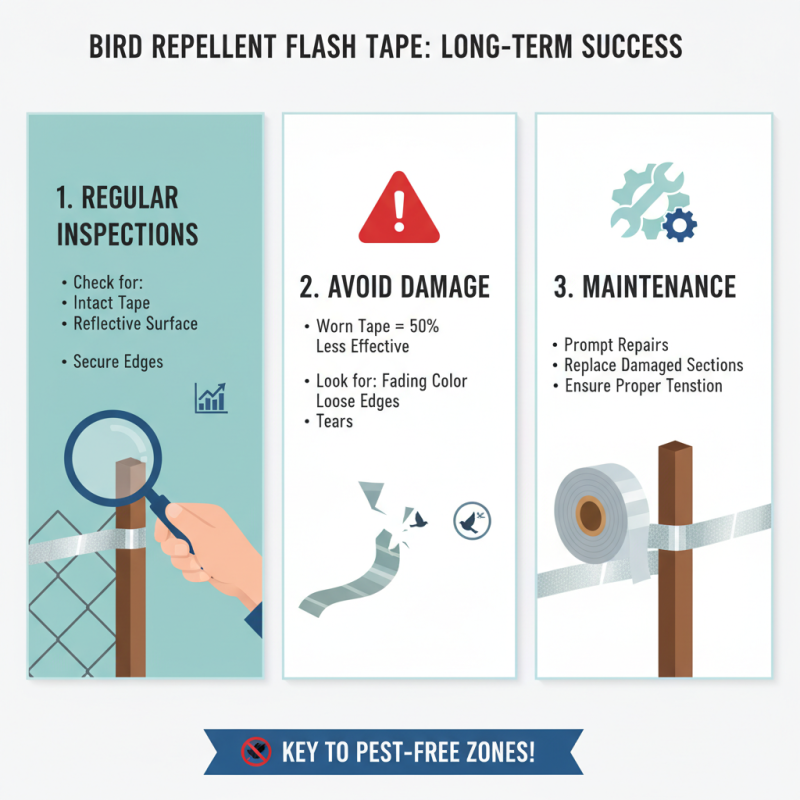
    Monitoring and maintaining bird repellent flash tape is vital for long-term effectiveness. Regular inspections ensure that the tape remains intact and reflects light properly. Industry reports indicate that worn or damaged tape can reduce effectiveness by up to 50%. Checking for loose edges or fading colors helps to identify issues early.

    Proper installation is also crucial. Install the tape at heights where birds are most active. Adjusting the angles and positioning can enhance its visibility. Research shows that angles between 30 and 45 degrees are optimal for maximum flash effect. If the tape has been installed for several months, periodic repositioning might be necessary. This tweaks exposure and maintains its effectiveness.

    Temperature and weather conditions can affect the durability of the tape. Exposure to UV rays can degrade material properties. In regions with extreme weather, the tape may need more frequent replacement. Monitoring environmental conditions alongside tape conditions will lead to better long-term results. Keep a log of installation dates and check-in intervals to track performance effectively. This practice helps identify patterns and ensures a proactive approach. Challenges in maintenance could arise from unexpected bird behavior, so staying informed is key.