What Are Plastic Anti Bird Spikes and How Do They Work?
Plastic Anti Bird Spikes are innovative solutions designed to deter birds from landing on buildings and structures. According to Dr. Emily Hargrove, an industry expert in wildlife management, "Effective bird control needs smart and humane solutions." These spikes are made of durable plastic and are known for their efficiency and affordability. They provide a physical barrier, preventing birds from resting on surfaces.
The design of these spikes varies, featuring flexible bases that contour to different surfaces with ease. Installation is straightforward, often requiring just adhesive or screws. Over time, these plastic spikes can help maintain the aesthetic of buildings while reducing bird-related issues, such as nesting and droppings.
Despite their effectiveness, there can be shortcomings. Some users report that spikes require regular maintenance to prevent debris accumulation. Others find that specific bird species may adapt, occasionally ignoring the spikes altogether. Thus, while Plastic Anti Bird Spikes offer a viable solution, continuous evaluation and adaptation are key to ensure their success in bird control.
What Are Plastic Anti Bird Spikes?
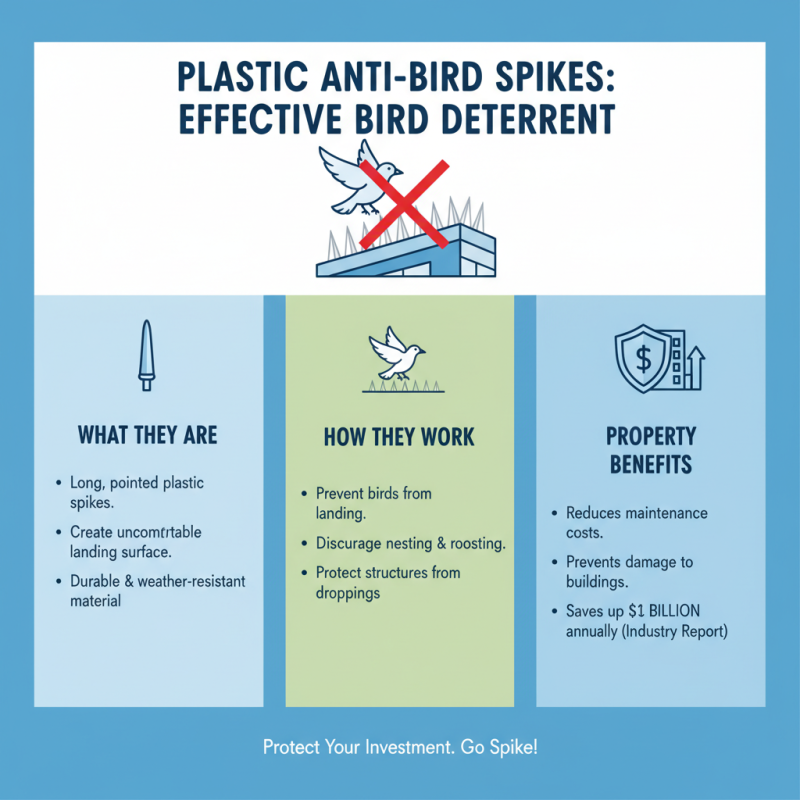
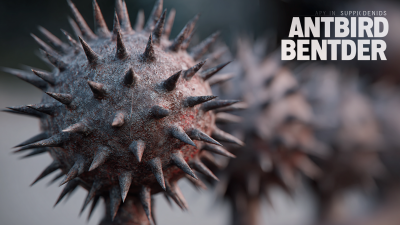
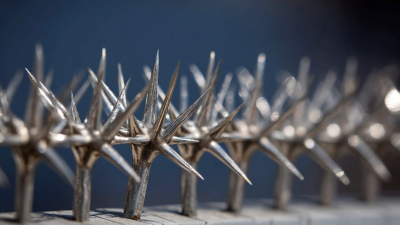
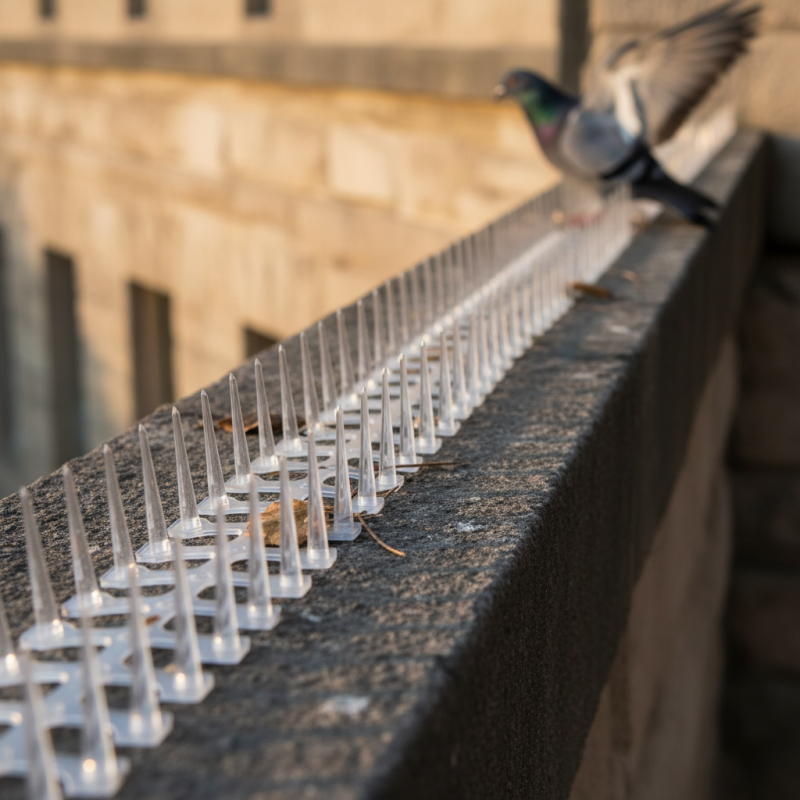
Plastic anti-bird spikes are innovative devices designed to deter birds from landing on surfaces. Made from durable plastic, these spikes are often installed on rooftops, ledges, and signage. Their design is intentionally uncomfortable for birds, making it difficult for them to settle. The spikes come in various lengths and shapes, allowing for flexibility in application.
When installed correctly, plastic anti-bird spikes create a physical barrier. They discourage birds like pigeons and seagulls from roosting. The spikes do not harm birds; they simply make the area less appealing. Many users appreciate this humane approach to bird control.
However, some might argue that the spikes may not be aesthetically pleasing. They can interfere with the overall look of a structure. Regular maintenance is also essential, as debris can accumulate around them. This could reduce their effectiveness. It’s important to assess the location and the type of birds present to determine if these spikes are the right solution.
Plastic Anti Bird Spikes Effectiveness
The chart above illustrates the effectiveness of plastic anti bird spikes by showing the estimated number of various bird species deterred per month. From the data, we can see that pigeons and sparrows are the most commonly deterred species, highlighting the importance of anti bird spikes in reducing nuisance from these birds.
The Purpose and Benefits of Using Plastic Bird Spikes
Plastic anti-bird spikes are an effective solution for deterring birds from landing on buildings. They serve a crucial purpose in urban areas, where bird populations can become a nuisance. These spikes create an uncomfortable landing surface that discourages birds from perching. In fact, studies show that bird spikes can reduce nesting by up to 90%.
One significant benefit of using plastic bird spikes is their durability. Unlike metal spikes, plastic options do not rust or corrode, making them suitable for various climates. They are lightweight and can be installed easily on roofs, ledges, and other surfaces. This ease of installation can lead to quicker and more efficient pest control solutions. The material also saves costs in terms of maintenance.
Tips: When installing plastic bird spikes, it’s essential to ensure they are placed at strategic intervals. Proper spacing is crucial for maximized effectiveness. Moreover, consider the local bird species and their behaviors. Some birds may require different approaches. Finally, regular inspections can help maintain their effectiveness.
What Are Plastic Anti Bird Spikes and How Do They Work? - The Purpose and Benefits of Using Plastic Bird Spikes
| Feature |
Description |
Benefits |
| Material |
Plastic spikes designed to deter birds. |
Durability and resistance to weathering. |
| Installation Method |
Easily affixed to various surfaces using adhesive or screws. |
User-friendly installation without professional help. |
| Effectiveness |
Prevents birds from landing or roosting. |
Significantly reduces bird-related issues such as droppings. |
| Aesthetic Impact |
Minimal visual obstruction when installed properly. |
Maintains the appearance of buildings while providing protection. |
| Maintenance |
Requires occasional cleaning to maintain effectiveness. |
Long-lasting solution with minimal upkeep. |
| Eco-Friendliness |
Made from recyclable plastic materials. |
Environmentally friendly option for bird control. |
How Do Plastic Anti Bird Spikes Work?
Plastic anti-bird spikes are an effective solution for deterring birds from landing on buildings and structures. They consist of long, sharp plastic points that make it uncomfortable for birds to settle. This design prevents nesting and protects property from potential damage caused by bird droppings. According to industry reports, bird-related issues can cost property owners up to $1 billion annually in maintenance and repairs.
These spikes work by creating an unstable surface that birds cannot perch on. The irregular spacing of the spikes confuses birds, discouraging them without causing harm. Research shows that plastic anti-bird spikes can reduce bird presence by nearly 90%. They are ideal for use on ledges, rooftops, and signs. In addition, plastic spikes are rust-resistant, making them durable against various weather conditions.
Tips: When installing these spikes, ensure they are firmly attached to prevent displacement. Regular maintenance is necessary to keep them effective. Observe local regulations concerning bird control to ensure compliance. Consider the type of birds in your area when selecting the right spike model. Over time, reassess the effectiveness of your installation, as bird behavior can change.
Installation Methods for Plastic Bird Spikes
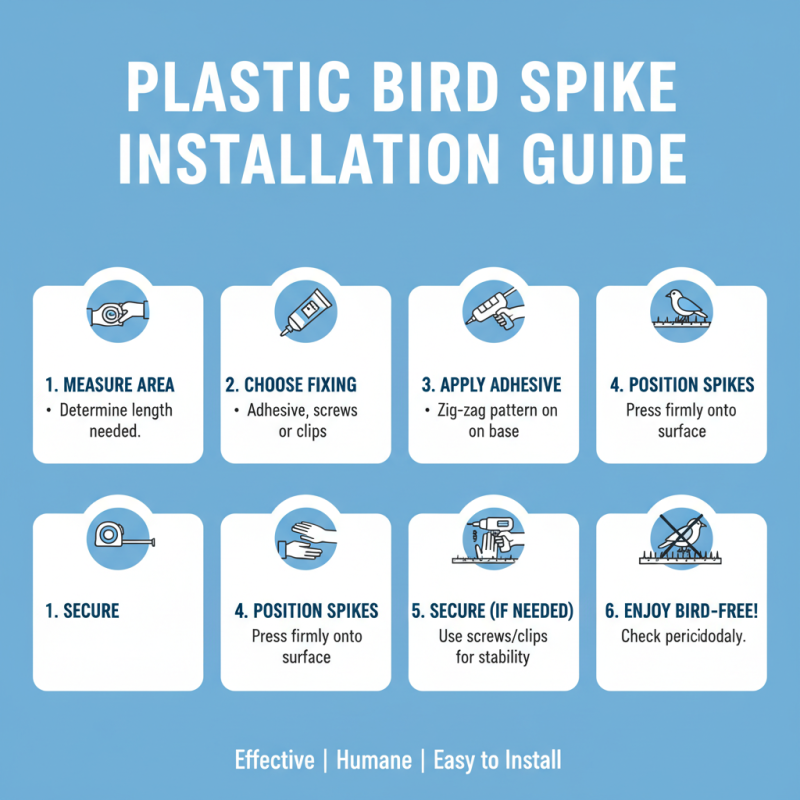
Plastic bird spikes are an effective solution for deterring birds from unwanted areas. But how do you install them? The process can be quite straightforward, yet requires attention to detail.
Start by selecting the right surface. Bird spikes work best on flat or slanted surfaces. Clean the area thoroughly to remove dirt or debris. This ensures a strong bond when attaching the spikes. While some prefer adhesive, others might use screws. Each method has its merits. With the adhesive, press the spike firmly onto the surface for a few seconds. If you choose screws, make sure to pre-drill holes to avoid cracking the material.
Placement is critical. Space the spikes evenly to provide maximum coverage. The spikes should extend beyond the edges to prevent birds from landing nearby. Take your time with this step. An uneven distribution could leave gaps, allowing birds to still find a perch. It’s essential to double-check your work. A little patience during installation leads to better results. If you find any misplaced spikes later, adjustments are tricky. So, get it right the first time.
Maintenance and Care for Plastic Bird Spike Systems
Plastic bird spike systems are an effective solution for keeping unwanted birds away. However, proper maintenance is essential for their effectiveness. Regular cleaning is necessary to ensure functionality. Accumulated dirt or debris can reduce the spikes' efficiency. A quarterly deep cleaning is often recommended, especially in urban areas.
Weather conditions can also affect these systems. For instance, extreme heat can cause plastic materials to warp. According to industry reports, up to 30% of plastic bird spikes may require replacement every few years due to environmental factors. This replacement is vital for maintaining a deterrent against nesting birds. Observing your installation regularly can help identify any issues early.
There are some common challenges in maintaining these systems. It is easy to overlook minor damages until they become significant. Misalignment of spikes can occur due to wind or other external forces. Even a slight shift can permit birds to land. Thus, routine inspections are crucial to ensure these spikes remain functional. Investing time in maintenance can yield long-term benefits, reducing bird-related issues effectively.



 Bird & Pigeon Pest Control
  Mice & Rat Pest Control
  Mole & Vole & Gopher Pest Control
  Fly Insect Pest Control
  Wasp & Bee Pest Control
  Moth Pest Control
  Mosquito Pest Control
  Cockroach Pest Control
  Wildlife Pest Control
  Snake Pest Control
  Bed Bug & Flea Pest Control
  Snail & Slug Pest Control
  Ant & Termites Pest Control
  Spider Pest Control
  Other Insect Pest Control
  Garden Products
  Blog
Blog  Dining Group
 Occasional Tables
 Barstool
 Company Profile
 Our Advantages
 Certification
 Factory VR
 Photos
 Videos
 Product News
 Industry News
 Media Live
 Our Services
 Distributor and Agent
 FAQs
FAQs