What is Stainless Steel Bird Spikes and How Do They Work?
Pest birds can cause considerable damage. They create health hazards, property degradation, and noise pollution. According to recent industry reports, establishments lose billions annually to bird-related issues. This highlights the need for effective solutions. One recommended method is the installation of stainless steel bird spikes.
Stainless steel bird spikes deter birds without causing them harm. These spikes are designed to prevent birds from perching and nesting, particularly in urban areas. With rust-resistant properties, they offer durability and longevity. They withstand extreme weather conditions, making them a reliable choice for various applications.
For many businesses, the choice of bird control products is crucial. Selecting high-quality solutions like stainless steel bird spikes can prevent potential losses. However, not all installations are perfect. Some users report installation challenges, which may require professional assistance. It’s vital to assess your specific needs to ensure effective implementation.
What Are Stainless Steel Bird Spikes?
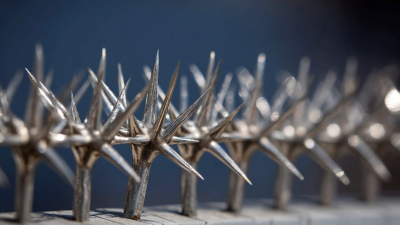
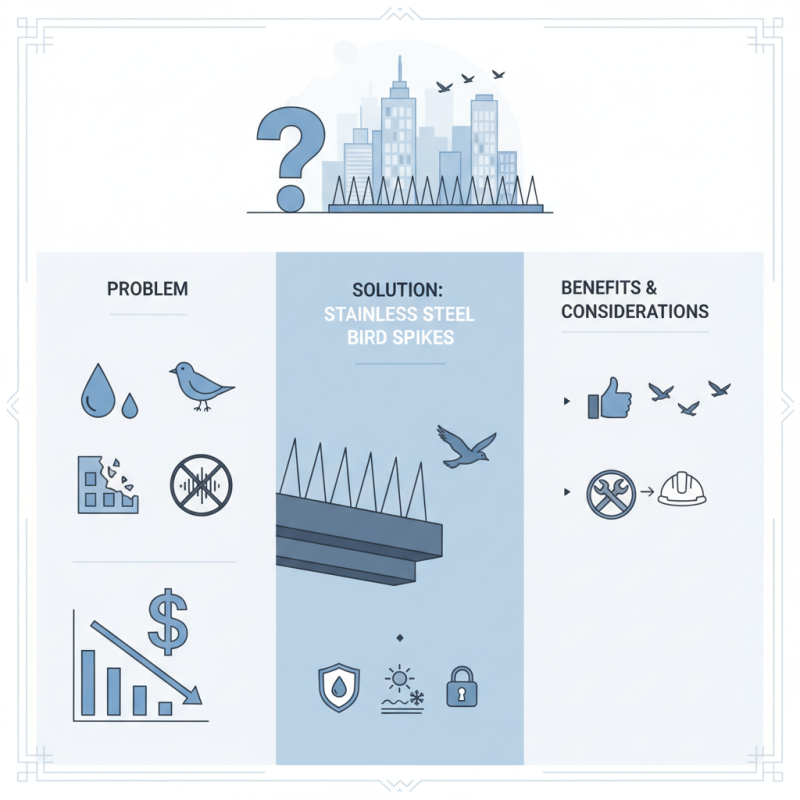
Stainless steel bird spikes are a common solution to deter birds from nesting or roosting in unwanted areas. These spikes are designed to create an uncomfortable environment for birds without causing them harm. Made from durable stainless steel, they resist rust and corrosion, making them effective in various weather conditions. According to the Bird Barrier report, using physical barriers like bird spikes can reduce bird-related issues by up to 90%.
The design of stainless steel bird spikes consists of several pointed spikes that disrupt birds' landing patterns. This confusion, coupled with the discomfort the spikes create, often encourages birds to find alternative locations. Industry statistics indicate that improper bird control methods can lead to lower property values and increased maintenance costs. A well-implemented bird spike system addresses these concerns effectively and allows property owners to maintain their environments.
While bird spikes are widely regarded as an effective solution, some users may find installation challenging or aesthetics unappealing. It is important to evaluate the specific needs of each location. Consider the potential impact on local bird populations and explore alternatives if necessary. Professional advice can help ensure a balanced approach to bird control.
Stainless Steel Bird Spikes: Effectiveness by Application
Stainless steel bird spikes are an effective solution for deterring birds from landing on buildings, bridges, and other structures. This chart illustrates the effectiveness of stainless steel bird spikes across various applications, highlighting their performance in commercial buildings, residential areas, bridges, urban parks, and billboards.
The Design and Construction of Bird Spikes
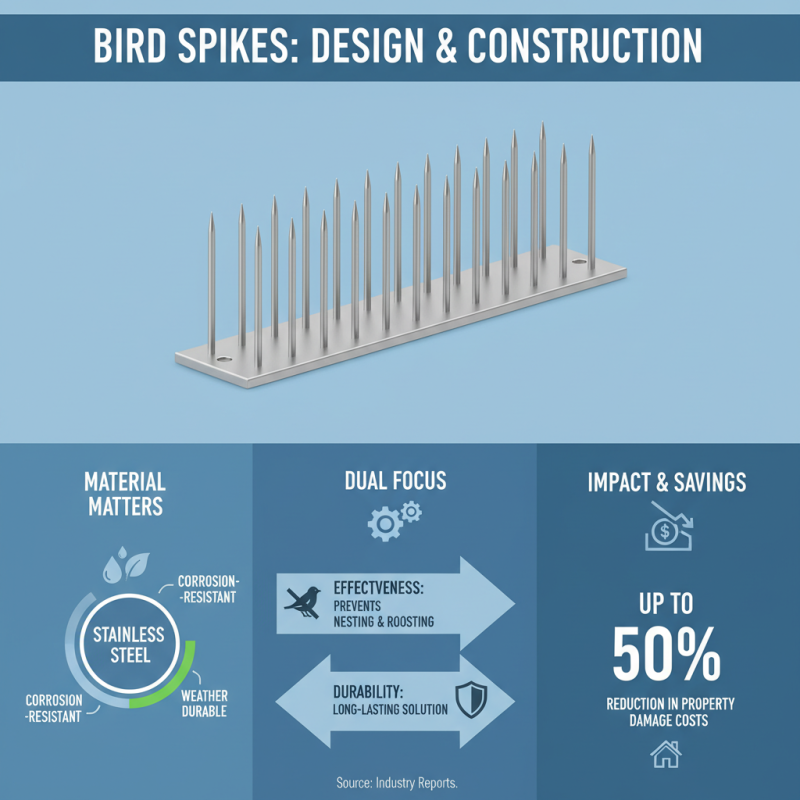
Stainless steel bird spikes are a vital solution for preventing bird nesting and roosting. Their design focuses on durability and effectiveness. Made from corrosion-resistant stainless steel, these spikes can withstand various weather conditions. Industry reports show that effective bird control can reduce property damage costs by up to 50%.
The construction of bird spikes involves a series of sharp, vertically-oriented rods. These rods deter birds without harming them. The spacing between spikes is crucial, as it prevents larger birds from landing while allowing smaller birds to pass. Research indicates that a proper installation can provide long-term results, with some systems lasting over a decade.
Tip: Regular maintenance checks can enhance the effectiveness of bird spikes. Inspect for rust or damage, as even small wear can reduce their deterrent capability.
Another consideration is placement. Bird spikes should be installed in areas where birds commonly perch. If not placed correctly, their effectiveness diminishes. Adjusting the angle or positioning can yield better results.
Tip: Consult with wildlife experts to ensure you are following best practices for bird control. Their insights can help in adapting your approach effectively.
How Stainless Steel Bird Spikes Deter Birds
Stainless steel bird spikes serve as an effective deterrent to unwanted birds. These spikes are made of durable and rust-resistant stainless steel. Their sharp, elongated design discourages birds from landing or nesting on ledges, rooftops, and other surfaces. When birds encounter these spikes, they quickly realize that landing is uncomfortable. This forces them to seek alternative resting places.
The strategic placement of bird spikes creates a barrier that birds find difficult to navigate. Many people underestimate how even a small installation can cover large expanses. The visual deterrent works, but so does the physical barrier. Bird spikes provide a dual approach; they disrupt natural behavior while making surfaces inhospitable.
Some might wonder about their effectiveness. Not every bird will be deterred by spikes alone. Larger species or determined birds may still attempt to land. Observing bird behavior after installation can highlight what works and what doesn’t. Adjustments may be necessary based on local bird populations. A thoughtful approach is key; learning from experience helps refine this pest control method.
Installation Methods for Bird Spikes
Bird spikes made from stainless steel are effective tools for deterring unwanted birds. Installing these spikes can seem straightforward, yet it requires careful consideration. The right preparation makes all the difference. To start, you need to choose a suitable location and surface, typically on ledges or roofs where birds tend to perch.
Clean the area thoroughly, removing any debris or old materials. This ensures the adhesive or mounting method works well. Various installation methods exist, including adhesive or screws. Adhesives are ideal for clean surfaces, while screws provide a more secure fit on rougher textures. Some may underestimate the importance of proper alignment. If spikes are misplaced, they won’t serve their purpose effectively.
Regular checks after installation are crucial. Birds can be persistent, so make sure the spikes hold up over time. If you notice any gaps or loose spikes, you may need to adjust them. Reflecting on the initial installation can lead to improvements. This ongoing evaluation can enhance effectiveness and prevent future bird nesting.
What is Stainless Steel Bird Spikes and How Do They Work? - Installation Methods for Bird Spikes
| Dimension |
Description |
Installation Method |
| Length |
Spikes typically come in lengths of 12 to 48 inches. |
Attach with screws or adhesive to a mounting surface. |
| Spike Height |
Spikes range from 3 to 10 inches high, deterring birds effectively. |
Use a mounting base for added stability. |
| Material |
Made from durable stainless steel for long-lasting use. |
Ensure the surface is clean for maximum adhesion. |
| Spacing |
Spikes are spaced to allow a barrier without gaps. |
Install closely to prevent birds from sitting. |
| Application Area |
Commonly used on rooftops, ledges, and walls. |
Position based on bird activity observations. |
Maintenance and Longevity of Stainless Steel Bird Spikes
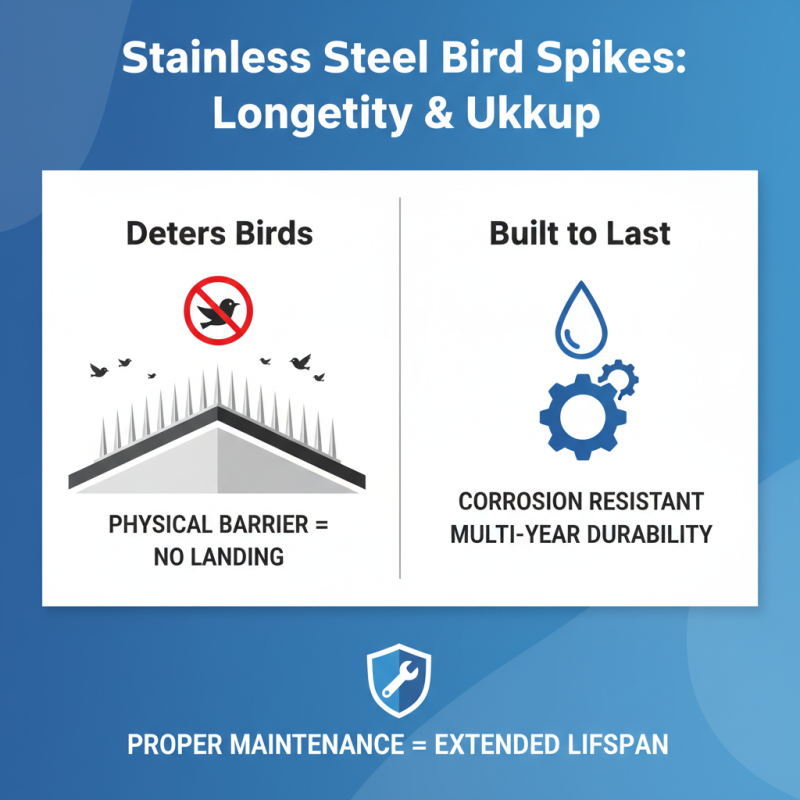
Stainless steel bird spikes are an effective solution for deterring birds from nesting and roosting on buildings. They are designed to create a physical barrier. This barrier makes it uncomfortable for birds to land. Proper maintenance is essential for longevity. Stainless steel is highly resistant to corrosion, which means these spikes can last several years in various weather conditions.
According to a report from the Center for Urban Bird Conservation, properly installed spikes can reduce bird activity by up to 90%. However, spikes must be regularly inspected for debris. Dirt and leaves can accumulate, reducing their effectiveness. Cleaning them can prolong their life and ensure they serve their purpose well.
Tip: Use a soft brush to gently clean the spikes. Avoid harsh chemicals that could degrade the material. Also, consider repositioning the spikes if birds find a way around them. Regular checks every six months can prevent potential issues before they arise. Observing bird behavior can provide insights into how well your bird spikes work. Engaging with the environment is crucial for future improvements.



 Bird & Pigeon Pest Control
  Mice & Rat Pest Control
  Mole & Vole & Gopher Pest Control
  Fly Insect Pest Control
  Wasp & Bee Pest Control
  Moth Pest Control
  Mosquito Pest Control
  Cockroach Pest Control
  Wildlife Pest Control
  Snake Pest Control
  Bed Bug & Flea Pest Control
  Snail & Slug Pest Control
  Ant & Termites Pest Control
  Spider Pest Control
  Other Insect Pest Control
  Garden Products
  Blog
Blog  Dining Group
 Occasional Tables
 Barstool
 Company Profile
 Our Advantages
 Certification
 Factory VR
 Photos
 Videos
 Product News
 Industry News
 Media Live
 Our Services
 Distributor and Agent
 FAQs
FAQs